BxcksAI
An AI powered rendering engine for interior and kitchen designers
BxcksAI is a custom visualization tool I engineered to bridge the gap between architectural sketches and high-end marketing visuals. Leveraging the multimodal capabilities of Google's Gemini models, it offers two distinct capabilities:
Text-to-CAD: Instantly converts written descriptions into architectural "Sketchup-style" line drawings.
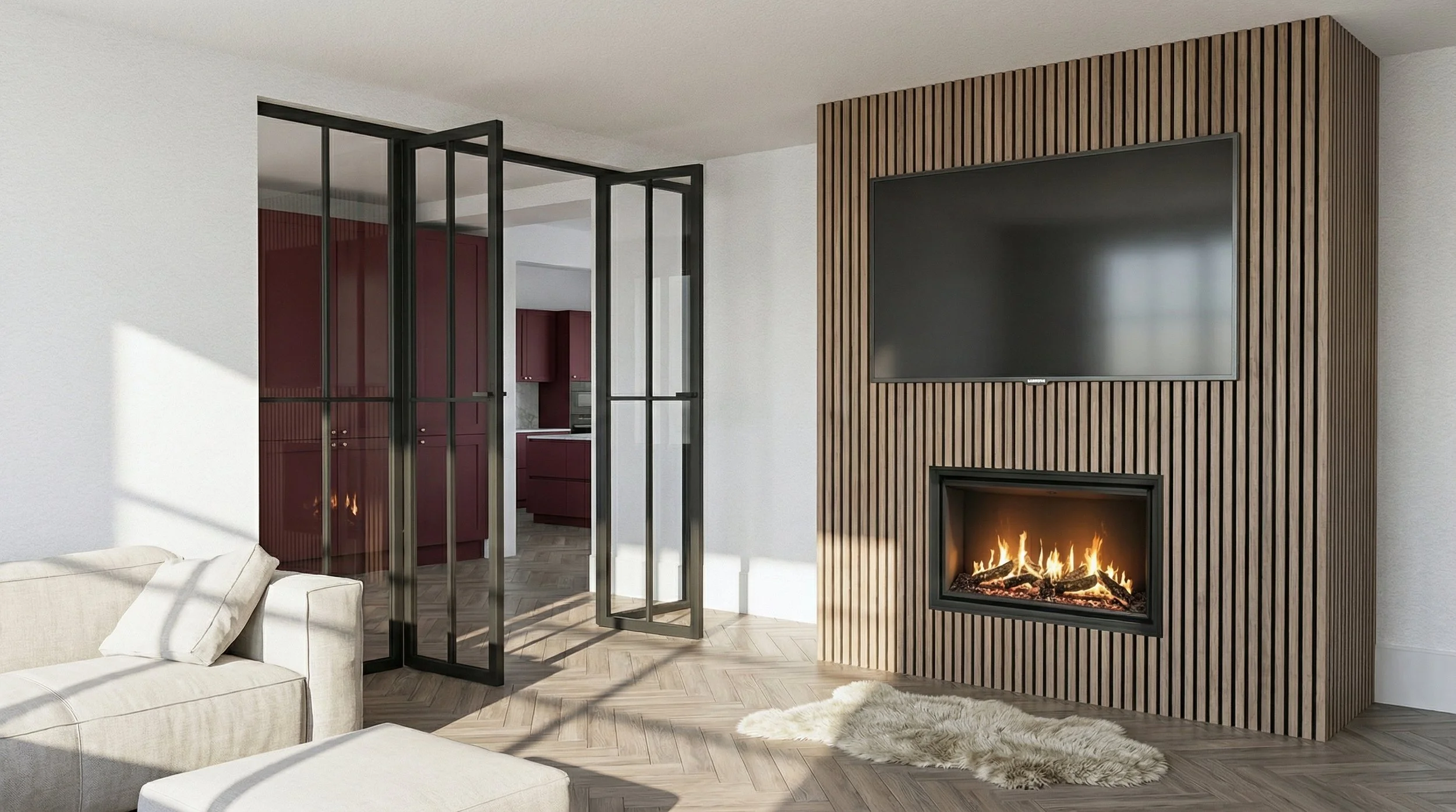
Geometry-Locked Rendering: Transforms line drawings (or existing renders) into 4K photorealistic images with strict adherence to the original layout.
By refining the underlying prompts to understand interior components, like cabinetry, lighting, and textures, I have created a workflow that delivers studio-quality results with a consistency that standard AI tools often lack.

BxcksAI – The "Geometry-Locked" Interior Engine
The Overview
BxcksAI is a state-of-the-art rendering engine capable of transforming raw architectural line drawings into 4K, photorealistic visualizations in seconds. Built on the latest Gemini 3.0 multimodal architecture, it is engineered specifically to solve the "hallucination problem" prevalent in generic generative AI.
Unparalleled Accuracy vs. Generic AI
While tools like Midjourney or DALL-E prioritize artistic flair over structure—often adding windows where there are none or warping furniture shapes—BxcksAI utilizes a proprietary "Geometry Lock" protocol.
100% Structural Adherence: The engine treats the input sketch as a rigid blueprint. If a door is drawn open, it renders open. If a window has three mullions, the render has three mullions.
Precision Object Swapping: Unlike standard in-painting, BxcksAI features a specific "Object Replacement" workflow. It creates a 3D semantic understanding of the scene, allowing users to completely replace the geometry of a specific furniture piece (e.g., swapping a square armrest chair for a curved velvet lounge chair) while maintaining perfect perspective and scale.
Studio-Grade Quality (V-Ray/Corona Standard)
The application is tuned to emulate the physics of high-end ray-tracing engines used in Hollywood and top architectural firms.
Photorealism: It generates global illumination, accurate soft-box shadows, and physically based rendering (PBR) materials. It accurately simulates complex textures like the anisotropy of brushed metal or the sub-surface scattering of marble.
Visual Identity Cloning: A "Style Transfer" feature allows users to upload a reference image (e.g., a photo from Architectural Digest), from which the engine extracts exact lighting profiles, color temperatures, and material palettes to apply to the target geometry.
The Tech Stack
Frontend: React 19, Tailwind CSS, Lucide React.
AI Backend: Google Gemini 3.0 Pro (Vision & Text) via direct API integration.
Key Capabilities: Multimodal image analysis, JSON-schema component extraction, 4K upscaling, and client-side geometry comparison sliders.